

Volleyball Rules PDF: A Comprehensive Overview (2025-2028)
The Fédération Internationale de Volleyball (FIVB) publishes official rulebooks, with the 2025-2028 version available on their website, www․fivb․com․
These PDF documents, typically around 89-91 pages and 3-4 MB in size, detail all aspects of gameplay, from court dimensions to referee signals․
Earlier versions (2017-2020 and 2021-2024) are also accessible, offering a historical perspective on rule evolution and changes within the sport․
Understanding the foundational principles of volleyball necessitates access to the official rulebook, primarily published by the FIVB (Fédération Internationale de Volleyball)․ These rules govern all levels of play, ensuring fairness and consistency across international competitions and influencing national leagues worldwide․
The current edition, covering the period 2025-2028, is a comprehensive document detailing every facet of the game․ It’s crucial for players, coaches, referees, and enthusiasts alike to familiarize themselves with its contents․ The rulebook isn’t static; it undergoes periodic revisions to adapt to the evolving dynamics of the sport and address ambiguities․
Previous versions, such as those from 2017-2020 and 2021-2024, provide valuable insight into these changes․ Accessing these PDF versions allows for tracking the development of the game’s regulations․ Beyond the core FIVB rules, variations exist for specific disciplines like Beach Volleyball and for organizations like Special Olympics, each with its own supplemental guidelines․
FIVB Rulebook Versions and Updates
The FIVB regularly updates its official volleyball rulebook to reflect the sport’s evolution and address any ambiguities․ Historically, rulebooks are typically valid for a four-year cycle․ For instance, the 2017-2020 version was approved by the 35th FIVB Congress in 2016, while the 2021-2024 edition was published in 2021․
Currently, the 2025-2028 rulebook, released in 2025, is the governing document․ These rulebooks are readily available as PDF downloads from the official FIVB website (www․fivb․com)․ Each version undergoes meticulous review and refinement by volleyball experts globally․
Significant changes are often accompanied by summary documents outlining the key modifications․ Keeping abreast of these updates is vital for all stakeholders – players, coaches, and referees – to ensure compliance and maintain a consistent understanding of the game․ Accessing past versions provides context for understanding the current regulations and their historical development․
Accessing the Official Volleyball Rules PDF
The primary source for obtaining the official volleyball rules in PDF format is the Fédération Internationale de Volleyball (FIVB) website: www․fivb․com․ Navigating to the website’s resources or rules section will lead you directly to the downloadable rulebooks․
The current version, covering 2025-2028, is readily available, typically presented as a 3-4 MB file containing approximately 89-91 pages․ Previous editions, such as the 2017-2020 and 2021-2024 rulebooks, are also often archived and accessible for reference․
Special Olympics volleyball rules can be found at www․specialolympics․org, offering adaptations for athletes with intellectual disabilities; These PDF documents are generally free to download and view, ensuring accessibility for all involved in the sport․ Ensure you are downloading from official sources to guarantee the accuracy and validity of the rules․

Gameplay Fundamentals
Official rulebooks detail essential elements: court dimensions, team composition, player positioning, and the sequence of serve and rally, per FIVB guidelines․
PDFs clarify these aspects․
The Court Dimensions and Zones
The official volleyball court, as detailed in the FIVB rulebook PDFs, measures 18 meters long and 9 meters wide․ This area is divided into two equal courts measuring 9×9 meters each, separated by a net․
Key zones include the front zone (3 meters from the net) where blocking and attacking near the net are permitted, and the back-row zone․ A line, 2 meters from the net, delineates the attack line for back-row players․
Service zones are located behind the end line, with servers needing to stand within these designated areas․ Side zones extend along the sidelines, defining boundaries for play․ The PDFs provide diagrams illustrating these dimensions and zones, crucial for understanding legal play and avoiding boundary faults․
Accurate court setup, based on these specifications, is fundamental to fair and consistent gameplay, as outlined in the official documentation․
Team Composition and Player Positions
According to the official volleyball rules PDFs published by the FIVB, a standard volleyball team consists of six players on the court at any given time․ Teams can have up to twelve players on their roster, allowing for substitutions․
Player positions are typically categorized as setters, outside hitters (also known as left side hitters), middle blockers, opposite hitters (right side hitters), and liberos; The libero, a defensive specialist, wears a contrasting jersey and has specific rules regarding their play․

Rotation is a key element; players rotate clockwise after winning the serve, cycling through all positions․ The rulebooks detail the responsibilities and restrictions associated with each position, ensuring balanced gameplay and strategic team composition․
Understanding these roles, as defined in the official PDFs, is vital for both players and coaches to optimize team performance and adhere to regulations․
Starting the Game: Serve and Rally
The official volleyball rules PDF meticulously outlines the procedures for starting a game, beginning with the serve․ The server must stand behind the end line and contact the ball with one hand or arm, initiating the rally․ Specific faults during the serve, such as stepping on or over the line, are detailed within the rulebook․
Once the serve is legally executed, the rally commences․ Teams have a maximum of three contacts to return the ball over the net․ Blocking does not count as one of these contacts․ The PDF clarifies legal hitting techniques and prohibited actions, like lifting or carrying the ball․
A rally continues until the ball touches the ground, goes out of bounds, or a fault is committed․ Understanding these initial phases, as described in the FIVB’s official documentation, is crucial for a fair and regulated game․

Scoring System
The official volleyball rules PDF details rally scoring, where a point is awarded on every rally, regardless of which team served․ Sets are typically played to 25 points,
with a two-point advantage required to win․

Rally Scoring Explained
The official volleyball rules PDF comprehensively explains the rally scoring system, a fundamental aspect of modern volleyball․ Unlike older scoring methods, rally scoring awards a point to the team winning each individual rally, irrespective of which team initially served․ This continuous point accumulation significantly accelerates the game’s pace and reduces lengthy service rotations․
The PDF clarifies that a successful attack, a blocked attack, or an opponent’s error all result in a point for the winning team․ This system eliminates the possibility of a team losing a point solely due to a service error by the opposing side․ Consequently, every play becomes crucial, demanding consistent performance from all players throughout the set․
Furthermore, the rulebook details how rally scoring impacts strategic gameplay, encouraging aggressive serving and dynamic offensive plays․ Teams are incentivized to take risks and pursue points actively, leading to more exciting and competitive matches․ The PDF also provides specific examples and illustrations to aid understanding of rally scoring nuances․
Sets and Match Format (25-point Sets)
The official volleyball rules PDF meticulously outlines the standard set and match format employed in most competitive volleyball games․ Typically, matches are best-of-five sets, meaning the first team to win three sets secures victory․ The initial four sets are played to 25 points, with a crucial requirement: a team must win by at least two points․
The PDF clarifies that if the score reaches 24-24, play continues until one team establishes a two-point lead (e․g․, 26-24, 27-25)․ This ensures a definitive conclusion to each set, preventing indefinite continuation․ This format promotes strategic play as teams near the winning score, requiring precise execution and tactical adjustments․
Detailed within the rulebook are scenarios illustrating how the 25-point format impacts game strategy and team composition․ The document emphasizes the importance of consistent performance across all sets, as each point contributes to the overall match outcome․ Understanding this format is vital for players, coaches, and spectators alike․
Tie-Breaker Sets (15-point Sets)
The official volleyball rules PDF dedicates specific sections to detailing the procedures for tie-breaker sets, also known as the deciding set․ When a match reaches a 2-2 set score, a final set is played to only 15 points․ However, mirroring the rules of regular sets, a team must still win by a margin of at least two points to claim victory in the match․
The PDF emphasizes that the same rules regarding substitutions and timeouts apply during the tie-breaker set as in previous sets․ Court switching occurs, with teams exchanging sides to neutralize any potential advantages from environmental factors like lighting or wind․ This ensures fairness and equal opportunity for both teams․
The document clarifies that the shortened scoring format of 15 points intensifies the pressure and demands quick adaptation from players․ Strategic decisions become even more critical, as every point carries increased weight in determining the match’s ultimate winner․ Understanding these nuances is crucial for competitive play․

Player Actions and Faults
The official volleyball rules PDF comprehensively outlines legal hits, contacts, and various faults players can commit during service and gameplay, impacting match outcomes․
Legal Hits and Contacts
The official volleyball rules PDF meticulously details what constitutes a legal hit and contact with the ball․ Generally, a team has a maximum of three contacts to return the ball over the net․
These contacts can be blocked (not counted as one of the three hits), bumped (underhand pass), set (overhead pass for attack), or spiked (aggressive overhead hit)․
Crucially, a player cannot hit the ball twice in succession, except during a block or when the first hit is a block recovery․
The rules specify that the ball must be cleanly hit; prolonged contact, such as carrying or throwing, is a fault․
Furthermore, the PDF clarifies acceptable body contact – the ball can be contacted with any part of the body, but deliberate use of lifting or carrying actions is prohibited․ Understanding these nuances, as outlined in the FIVB rulebook, is vital for fair play and accurate refereeing․
Faults During Service
The official volleyball rules PDF comprehensively outlines faults that can occur during the serve․ A server must contact the ball within a specified timeframe after the referee’s whistle, and the ball must be tossed or released before impact․
Stepping on or over the end line before contacting the ball is a common fault, as is failing to serve the ball over the net․
The FIVB rulebook details that the serve cannot be screened by teammates – they cannot hide the server from the receiver’s view․
Furthermore, a fault is called if the server throws the ball up and doesn’t actually hit it․
Importantly, the PDF clarifies that a foot fault, even if unintentional, results in a point for the opposing team․ Understanding these service-related faults, as detailed in the official document, is crucial for both players and officials to ensure fair and accurate gameplay․
Faults During Play (Net Touches, Boundary Faults)
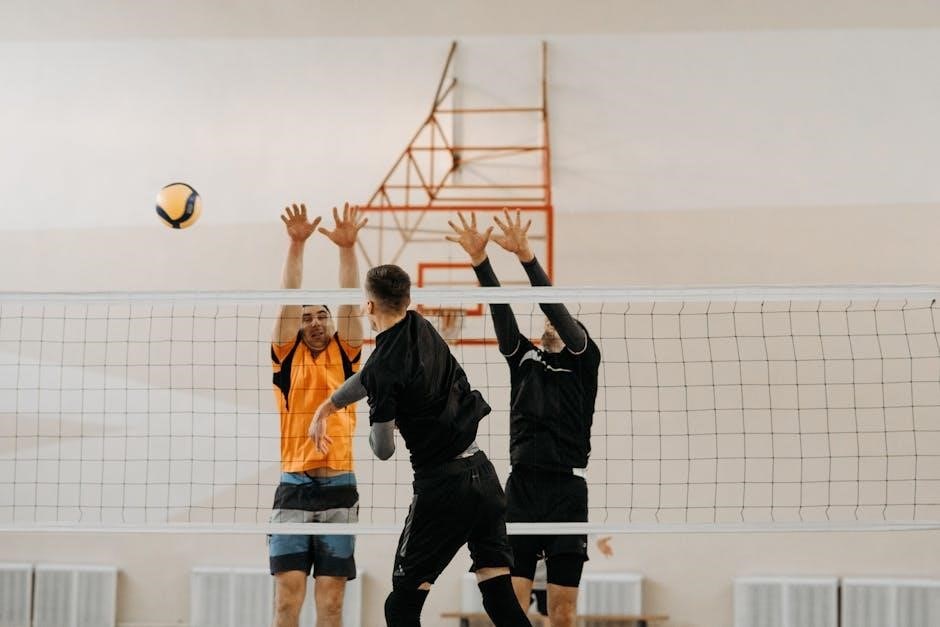
The official volleyball rules PDF meticulously details faults occurring during active play․ Touching the net between the antennae during the action of playing the ball is a fault, regardless of whether it affects the play․
Players cannot reach over the net to contact the ball in the opponent’s space, except for a blocker’s hands following a completed attack․
Boundary faults are also clearly defined; the ball must land completely within the boundaries of the court to be considered “in․”
According to the FIVB rulebook, a ball landing on the boundary line is considered good․
Furthermore, any contact with the antennae is a fault․ The PDF emphasizes that these faults are judged by the referees, and understanding them is vital for players to avoid penalties and maintain fair competition․ Accurate interpretation of these rules, as presented in the official document, is paramount․
Refereeing and Official Signals
The volleyball rules PDF comprehensively outlines referee responsibilities and authority, detailing proper conduct and decision-making․
It includes illustrations of common signals used to indicate faults, player substitutions, and set/match conclusions․
Referee Responsibilities and Authority
The official volleyball rules PDF meticulously defines the roles and powers vested in referees during a match․ First Referee (Head Referee) has ultimate authority over all decisions, managing the flow of play, and ensuring adherence to regulations․ They oversee scoring, rule interpretations, and maintain control of the game environment․

Second Referee assists the First Referee, primarily focusing on net faults, ball handling errors, and player conduct․ They also manage the team benches and oversee substitutions․ Line Judges are responsible for determining if balls land in or out of bounds, signaling their observations clearly to the referees․
The PDF emphasizes the importance of consistent and impartial officiating, requiring referees to apply the rules fairly to both teams․ Referees must possess a thorough understanding of the rules, demonstrate excellent judgment, and maintain a professional demeanor throughout the competition․ Their decisions are final, subject only to the challenge procedures outlined within the rulebook․
Common Referee Signals
The official volleyball rules PDF includes a detailed section dedicated to referee signals, crucial for clear communication during a match․ Extended arm vertically indicates a point scored, while crossed arms signify a fault․ A closed fist signals a double hit, and rotating the forearm denotes a lift or carry․
Touching the net during play is indicated by touching the net with the hand, and a boundary fault is shown by pointing towards the line where the ball landed out․ Illegal block is signaled by blocking the serve, and back row attack fault is indicated by a forward swinging motion of the arm․
The PDF stresses the importance of precise and unambiguous signals, ensuring players and spectators understand the referee’s decisions․ Consistent application of these signals is vital for maintaining fair play and minimizing confusion throughout the game; Referees must practice and master these signals for effective officiating․
Challenging Calls and Procedures
The official volleyball rules PDF outlines procedures for challenging calls, a system designed to ensure accuracy in critical situations․ Typically, each team is granted a limited number of challenges per set, allowing them to dispute line calls or contact judgments․
To initiate a challenge, the coach must signal immediately after the contested play, using a distinct hand gesture as defined in the rulebook․ The referee then reviews the play using video replay technology, if available, to make a final determination․
A successful challenge results in the original call being overturned, awarding the point to the challenging team․ However, an unsuccessful challenge results in the loss of a challenge opportunity․ The PDF emphasizes that challenges are limited to specific situations and must be made promptly to avoid delays in gameplay․

Specific Rule Variations
The volleyball rules PDF details adaptations for Beach Volleyball, Special Olympics, and Junior levels, outlining modified rules for each discipline to suit specific player needs․
These variations address court size, player numbers, and scoring adjustments․
Beach Volleyball Rule Adaptations
The official volleyball rules PDF comprehensively outlines the distinct adaptations governing beach volleyball play, differing significantly from the indoor game․ Key modifications include a smaller court size – 8m x 16m compared to the indoor 9m x 18m – and the surface being sand, impacting movement and techniques․
Teams consist of two players, demanding greater all-around skill sets from each athlete․ Blocking rules are also adjusted; a block does not count as one of the team’s three allowable touches․ Weather conditions play a crucial role, with rules addressing play during wind and rain, potentially leading to match suspensions․
The scoring system generally follows rally scoring, but specific regulations regarding line calls and boundary judgments are tailored for the beach environment․ Foot faults are more common due to the sand surface, requiring precise footwork․ The PDF provides detailed guidance on these nuances, ensuring fair and consistent application of the rules․
Special Olympics Volleyball Rules
The official volleyball rules PDF acknowledges the unique adaptations implemented for Special Olympics volleyball, prioritizing inclusivity and athlete participation․ Complete rule listings are readily available at www․specialolympics․org, detailing modifications designed to accommodate varying skill levels and abilities․
Key adjustments often include allowing for more touches per side, simplifying serving rules, and potentially modifying court dimensions to suit athlete needs․ Emphasis is placed on promoting positive sportsmanship and creating a supportive environment․ Rules regarding player positioning may be less strict, encouraging broader participation․
The Special Olympics rulebook, accessible as a PDF, provides clear guidance on these adaptations, ensuring fair play and meaningful competition․ It details specific regulations concerning athlete eligibility and classification, alongside modifications to scoring and officiating procedures․ These rules aim to maximize enjoyment and athletic achievement for all participants․

Junior Volleyball Rule Modifications
Junior volleyball, encompassing various age groups, often employs rule modifications detailed within official volleyball rules PDFs to foster skill development and participation․ These adjustments, varying by league and age division, prioritize learning and enjoyment over strict adherence to professional standards․
Common modifications include reduced court sizes for younger age groups, allowing for easier rallies and increased touches․ Serving rules may be relaxed, permitting overhand or underhand serves without strict line-call enforcement․ Net heights are typically lowered to accommodate developing athletes․
PDF resources from governing bodies like USA Volleyball outline these specific adaptations․ These modifications aim to create a positive learning environment, encouraging fundamental skill acquisition and teamwork․ Emphasis is placed on participation and sportsmanship, rather than solely on competitive outcomes․ Rulebooks often include guidance on appropriate coaching techniques and player development strategies․