

Understanding Manual Well Pumps
Manual well pumps offer a reliable, off-grid water source, utilizing human power to draw clean water from beneath the earth’s surface for various needs.
What is a Manual Well Pump?
A manual well pump is a mechanical device operated by human effort, designed to lift water from a well. Unlike electric pumps, these systems require no electricity, making them ideal for remote locations, emergency preparedness, or those seeking self-sufficiency.
Historically, these pumps were a primary source of water for homes and farms. Today, they remain a practical option where grid power is unavailable or unreliable. They function by creating a pressure differential, drawing water up through a pipe using a piston or rotary mechanism.

These pumps provide a sustainable and cost-effective solution for accessing groundwater, offering a tangible connection to the water source and a sense of independence. They are a testament to simple, effective engineering.
Types of Manual Well Pumps
Manual well pumps come in several designs, each suited to different well depths and water demands. Shallow well pumps are effective for wells within 25 feet, utilizing suction to draw water upwards. Deep well pumps, conversely, are designed for wells exceeding this depth, employing a piston or rotary action to overcome gravity.
Piston pumps, a common type, use a reciprocating piston within a cylinder to create pressure. Rotary pumps, less frequent, utilize a rotating mechanism. Beyond these core types, variations exist, including pitcher pumps and diaphragm pumps, each offering unique advantages.
Selecting the appropriate pump depends heavily on your specific well characteristics and water usage requirements, ensuring efficient and reliable water access.
Shallow Well Pumps
Shallow well pumps are ideal for accessing groundwater sources less than 25 feet below the surface. These pumps operate on a simple suction principle; the pump creates a vacuum, drawing water up the drop pipe. They are generally simpler in construction and easier to install than deep well options, making them a popular choice for basic water needs.
Common types include the pitcher pump and some simpler piston pump designs adapted for shallow wells. However, their effectiveness diminishes with increased depth, as atmospheric pressure limits the suction lift. Regular priming is often required to maintain suction.
These pumps are best suited for low-demand applications like garden irrigation or supplying water to livestock, offering a cost-effective solution for accessible groundwater.
Deep Well Pumps
Deep well pumps are engineered for accessing groundwater located more than 25 feet below the surface, where shallow well pumps struggle to operate effectively. Unlike suction-based systems, these pumps utilize a piston or rotary mechanism lowered directly into the well casing.
The pump pushes water upwards, overcoming the limitations of atmospheric pressure. They require more robust construction and a more involved installation process, often involving specialized tools and techniques. A key component is the drop pipe, which must be strong enough to support the pump’s weight and the column of water.
Deep well pumps are essential for reliable water access in areas with significant groundwater depth, providing a consistent supply for household use and larger-scale applications.
Piston Pumps vs. Rotary Pumps
Piston pumps, the more traditional design, employ a reciprocating piston within a cylinder to create suction and pressure, delivering water in distinct pulses. They are known for their simplicity and ability to handle sediment, but can be slower in operation.
Rotary pumps, conversely, utilize a rotating mechanism – often a vane or impeller – to continuously move water upwards. This results in a smoother, more consistent flow rate, making them preferable for higher-demand applications.
While piston pumps generally require less maintenance, rotary pumps can be more efficient. The choice depends on well depth, water quality, and desired flow characteristics; both offer reliable, manual water access.

How Manual Well Pumps Work
Manual well pumps harness physical effort to create a vacuum, drawing water up from the aquifer through a pipe, providing a sustainable solution.
The Basic Pumping Mechanism
The core of a manual well pump’s operation revolves around creating differential pressure. When the handle is operated, a piston within the cylinder moves, initially creating a vacuum. This vacuum pulls water up the drop pipe from the well.
As the piston rises, a check valve (typically a foot valve at the bottom of the drop pipe) prevents water from flowing back down into the well. Continued upward motion builds pressure above the piston.
When the piston reaches its peak, the check valve above it opens, allowing water to flow into the pump’s cylinder. Descending the handle reverses the process, forcing water out of the pump and into the spout, ready for use. This cyclical action efficiently lifts water.
Suction and Pressure Explained
Suction, in a manual well pump, isn’t about ‘sucking’ water up; it’s about reducing pressure. The upward piston stroke expands the volume within the cylinder, lowering the pressure below atmospheric pressure. Atmospheric pressure then pushes the water up the drop pipe to equalize it.
This creates a vacuum, allowing water to rise. Conversely, pressure builds as the piston descends, compressing the water. This increased pressure overcomes the force of gravity and the check valve resistance, forcing water out.
The interplay between these two forces – reduced suction and increased pressure – is fundamental to the pump’s function. Efficient sealing is crucial to maintain these pressure differentials and maximize water output.
Components of a Manual Well Pump
A manual well pump comprises several key parts working in harmony. The cylinder houses the piston, creating the pumping action. The piston, with its leather cup, forms a seal and drives water upwards. A drop pipe extends into the well, delivering water to the cylinder.
Crucially, a foot valve at the pipe’s end prevents water from draining back down. The handle provides leverage, and a connecting rod transfers motion to the piston. Finally, a check valve ensures one-way flow, directing water to the spout.
Each component’s integrity is vital for efficient operation; wear or damage to any part can significantly reduce performance.
The Cylinder & Piston Assembly
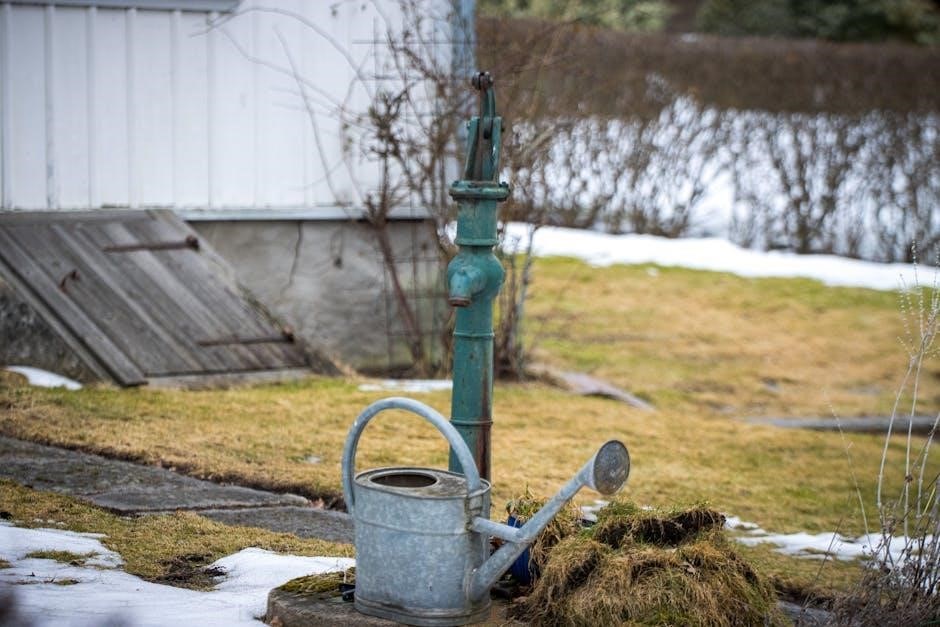
The cylinder is the pump’s core, a precisely bored chamber where the magic happens. Typically made of cast iron or steel, it must withstand constant pressure and friction. Inside resides the piston, a crucial component featuring a leather or rubber cup.
This cup creates a watertight seal against the cylinder wall, essential for generating suction. As the handle is pumped, the piston moves up and down, drawing water in and expelling it out. Proper alignment and a smooth surface are vital for efficient operation.
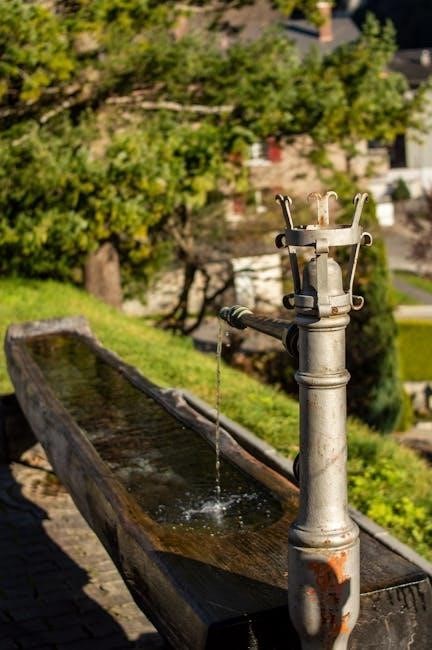
Wear on the cup necessitates replacement to maintain the pump’s prime and prevent leaks, ensuring consistent water delivery.

The Drop Pipe & Foot Valve
The drop pipe is a crucial conduit extending from the pump cylinder down into the well itself. It delivers the water drawn up by the piston. Constructed from durable materials like PVC or galvanized steel, it must resist corrosion and pressure.
At the pipe’s lower end sits the foot valve, a one-way check valve preventing water from flowing back down the well when the pump isn’t actively drawing. This maintains prime, saving effort on each pump stroke.
Regular inspection of the foot valve is essential; debris can clog it, reducing pump efficiency or causing complete failure. A functioning foot valve is paramount for reliable water access.
The Handle & Connecting Rod
The handle provides the mechanical advantage needed to operate the pump, translating human effort into reciprocating piston movement. Ergonomic designs and comfortable grips minimize strain during frequent use.

The connecting rod is the vital link between the handle’s motion and the piston within the cylinder. It transmits the up-and-down force, driving the pumping action. Constructed from strong steel, it must withstand considerable stress and maintain alignment.
Proper lubrication of the connecting rod’s joints is crucial for smooth operation and longevity. Regular checks for wear or bending are also important to prevent pump failure and ensure efficient water delivery.

Choosing the Right Manual Well Pump
Selecting the ideal pump requires careful consideration of well depth, water demand, and pump type to ensure a sustainable and efficient water supply.
Assessing Your Well Depth
Determining your well’s depth is crucial for selecting the appropriate manual pump. A shallow well, typically less than 25 feet deep, can utilize a simpler pump mechanism. However, deeper wells necessitate pumps designed to overcome greater hydrostatic pressure.
Accurate measurement ensures the pump’s suction lift capability matches the water level. Insufficient lift results in a pump that can’t draw water, while an oversized pump is unnecessary expense. Consider seasonal water level fluctuations; the depth to water will vary throughout the year.
Professional well logs, if available, provide precise depth information. Otherwise, manual measurement using a weighted tape or specialized well sounder is required for accurate pump selection and successful operation.
Measuring Static Water Level
The static water level represents the water’s surface when the pump isn’t operating and no water is being withdrawn from the well. This measurement is fundamental for pump selection. Use a weighted tape measure marked in feet, slowly lowering it into the well until it reaches the water surface.
Note the reading at the well casing. You’ll feel a distinct change when the tape encounters water. Repeat this measurement several times to ensure accuracy, averaging the results. Account for the distance from the well casing lip to the actual water level.
Record this static water level; it’s the key to determining the total dynamic head the pump must overcome. This measurement, combined with desired flow rate, dictates the pump type and size needed for reliable water access.
Considering Water Demand
Accurately estimating your water needs is crucial for selecting a manual well pump capable of meeting your requirements. Water demand varies significantly based on usage – household needs differ greatly from those of livestock or gardening.
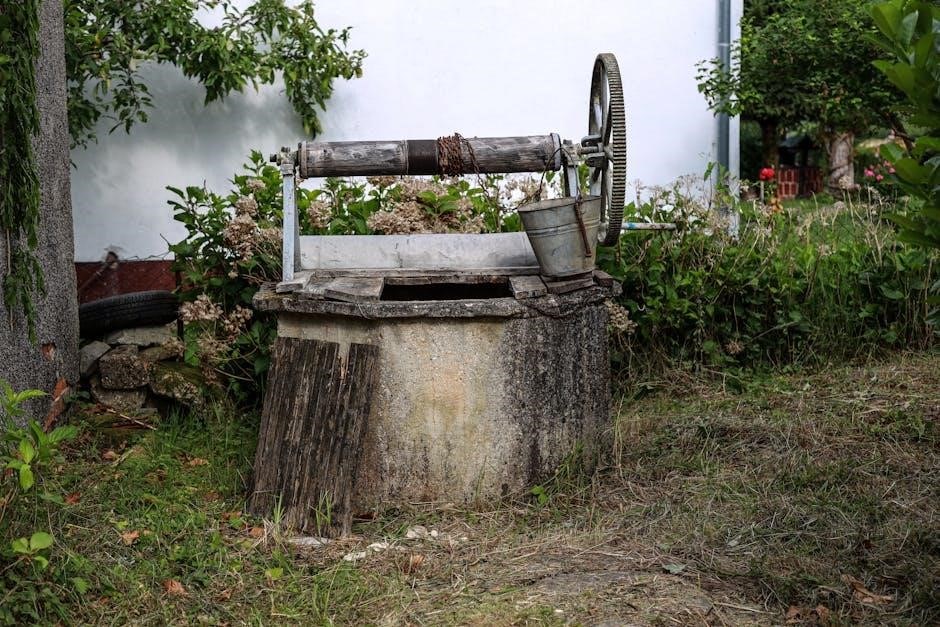
For basic household use (drinking, cooking, hygiene), estimate around 10-20 gallons per person, per day. Livestock, especially larger animals, require substantially more, potentially 5-20 gallons per animal daily. Consider peak demand times, like morning routines or watering gardens during dry spells.
Factor in future needs; it’s wise to slightly overestimate to avoid pump limitations. A pump delivering a consistent flow rate, even during peak times, ensures reliable water access for all intended purposes.
Household vs. Livestock Needs
Distinguishing between household and livestock water requirements is paramount when choosing a manual well pump. Human consumption prioritizes potable water – clean, safe for drinking and cooking – demanding a higher standard of pump hygiene and potentially filtration.
Livestock, while needing substantial volumes, may tolerate slightly less pristine water, focusing on quantity for hydration and sanitation. Different animals have varying needs; horses drink significantly more than chickens.
Consider separate pumping systems or dedicated storage tanks to avoid contamination. A pump sized for household use might be inadequate for livestock, and vice-versa. Careful assessment ensures both humans and animals receive sufficient, appropriate water access.

Installation & Maintenance
Proper installation and consistent maintenance are crucial for a manual well pump’s longevity, ensuring a dependable water supply for years to come.
Proper Pump Installation Steps
Careful installation is paramount for optimal performance. Begin by securely mounting the pump on a stable, level surface, ideally a concrete pad. Next, connect the drop pipe, ensuring a tight seal to prevent leaks and maintain prime.
The foot valve must be correctly positioned at the bottom of the well, preventing debris from entering the system. Align the connecting rod and handle, verifying smooth operation throughout the pumping stroke.
Thoroughly inspect all connections for tightness and proper alignment. Finally, before initial use, prime the pump by filling the cylinder with water – this eliminates air pockets and facilitates the suction process, guaranteeing efficient water delivery.
Priming the Pump
Priming is crucial for initiating water flow in a manual well pump, especially after installation or periods of inactivity. Begin by slowly pouring water into the pump cylinder through the designated priming port until it’s completely full.
This action displaces any air trapped within the system, which hinders the suction process. Operate the pump handle several times, observing for water expulsion – this confirms the air is being purged.
Continue pumping until a consistent stream of water emerges, indicating a successful prime. A tight seal on all connections is vital to retain the prime and prevent air re-entry, ensuring reliable water access.
Regular Maintenance for Longevity
Consistent maintenance dramatically extends the lifespan of your manual well pump and ensures reliable operation. Annually inspect all components for wear and tear, paying close attention to the leather cup or piston seals – replace them if cracked or deteriorated.
Regularly lubricate moving parts, like the connecting rod and handle pivot points, with food-grade grease to minimize friction and prevent corrosion.
Periodically check the drop pipe and foot valve for sediment buildup, cleaning them as needed to maintain optimal water flow. Proper winterization, draining the pump to prevent freezing, is also essential for longevity.
Lubrication & Parts Replacement
Effective lubrication is crucial; use food-grade silicone grease on the piston rod, cylinder walls, and handle pivot points to reduce friction and prevent corrosion. Avoid petroleum-based products, as they can contaminate the water supply.
Parts replacement is inevitable over time. Leather cups wear out – inspect annually and replace when cracked or losing suction. The foot valve, prone to sediment buildup, may need periodic cleaning or full replacement.
Keep spare parts on hand, including cups, washers, and O-rings, to minimize downtime. Always use manufacturer-approved replacement parts to ensure compatibility and maintain pump efficiency.